Clearer fraud reviews, new product pages, and Draft reply in Mail
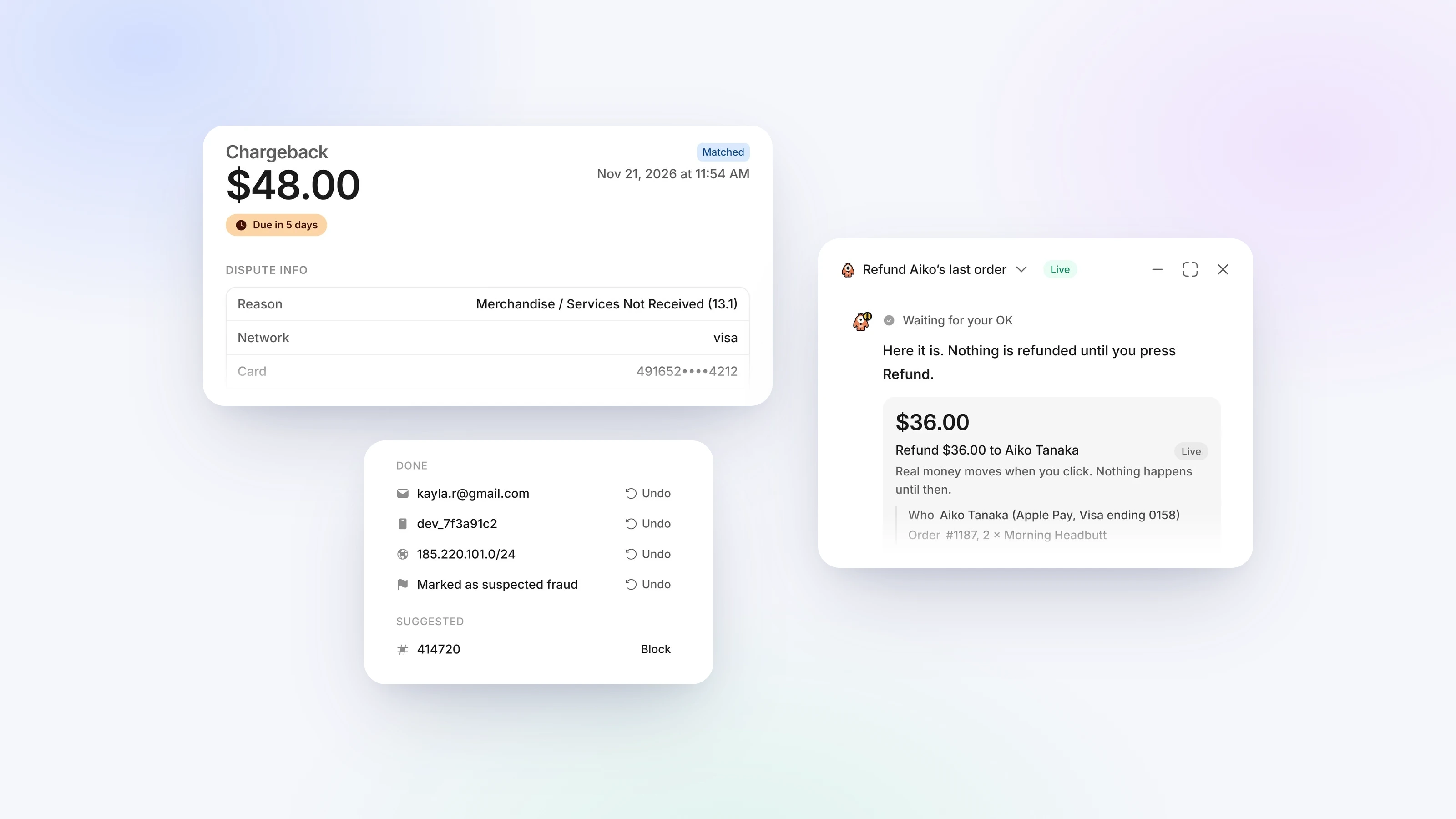
Your teammate's fraud reviews now come to a decision more often: Looks normal or Fraud. Needs a look is kept for the cases that are truly split, and it starts with the one thing you should check. A review says what it found, never what it left undone, and it never tells you to void.
Fraud protection, chargebacks and the AI teammate in your dashboard each have a public page with short clips of the real dashboard: Fraud Protection, Chargebacks and AI Teammate, under Products at the top of the site. The Agent Dashboard page is new too.
In the Agent Dashboard, Draft reply under an email writes the whole reply from the thread and the merchant's case, answering each question in the last message. Select any words to Rephrase them, make them Shorter, More formal or Friendlier, or Say how to change them. The same changes for the whole draft sit on the row with Send.
- A thread now shows every message in the conversation, including automatic replies and replies a colleague's mailbox picked up first.
- Emails open already formatted, with no flash of plain text and no jump as pictures load.
- All mail, the Mail tab itself, now shows everything: your important mail with its whole history and every other email, one row per conversation.
- Read and unread is one state for you across All mail and Important, on every device.
- Attachments show as large file cards. The AI only attaches a file when someone asked for it, and tells you when the words mention a file that will not go.
- On a shared mailbox, an email signs with the person who sends it, and what you review is exactly what is sent.
- Ask the AI to archive, unarchive or mark mail read or unread, for one thread or many, such as everything from one domain. More than 10 threads come as a card with the exact count, and you can ask it to undo.
- The AI can also answer Check these and use a file on the VAR step, each on a card you confirm.
- When the AI offers to collect more from a merchant, you can pick We already have what we need. Collecting stops and the case moves on with what it has, and the AI tells you once what each processor will not get. A signature, the checks and card rates still hold it.
- Once a case is ready, the merchant's teammate sets up card processing itself on Autopilot, or asks you on a card first.
- A resubmission after a decline sends only what the bank asked for. The application and its other files are not sent again unless you ask.
- A processor's later email now fills its backup VAR sheet, even one already confirmed. Sending the sheet again retries the backup's setup, and missing numbers are asked of the processor once.
- The teammate no longer asks a processor for numbers it already sent.
- In Cmd+K, merchants, cases and other records come before Email, so typing a merchant's name and pressing Enter opens the merchant. Do it here comes last.
- A chargeback's page and its response preview no longer show internal provider names.
- The response sent to the bank no longer has a processor row. The bank relies on the descriptor, the authorization code and the ARN.
- The API docs are simpler: one set of sandbox test cards, and routing described once. Paysio picks the route.
- Error messages no longer name the provider behind a payment. Status codes and
codevalues are unchanged, and nothing your integration sends or receives has changed.